The Nomad School of Film and Performing Arts is the first institution of its kind in India - led by and dedicated to the creative vision of marginalised communities. It builds on years of community-led and research-based filmmaking and theatre, particularly on the pioneering work of Budhan Theatre and Budhan Stories.
Its mission is to nurture cultural leaders from De-Notified Tribes (DNTs), Adivasi, Dalit, and other marginalised groups. Through film, theatre, and research, the School seeks not only to challenge erasure and harmful stereotypes, but to restore dignity, identity, and agency within communities that have long been misrepresented or excluded from the mainstream public sphere.


Training and Practice
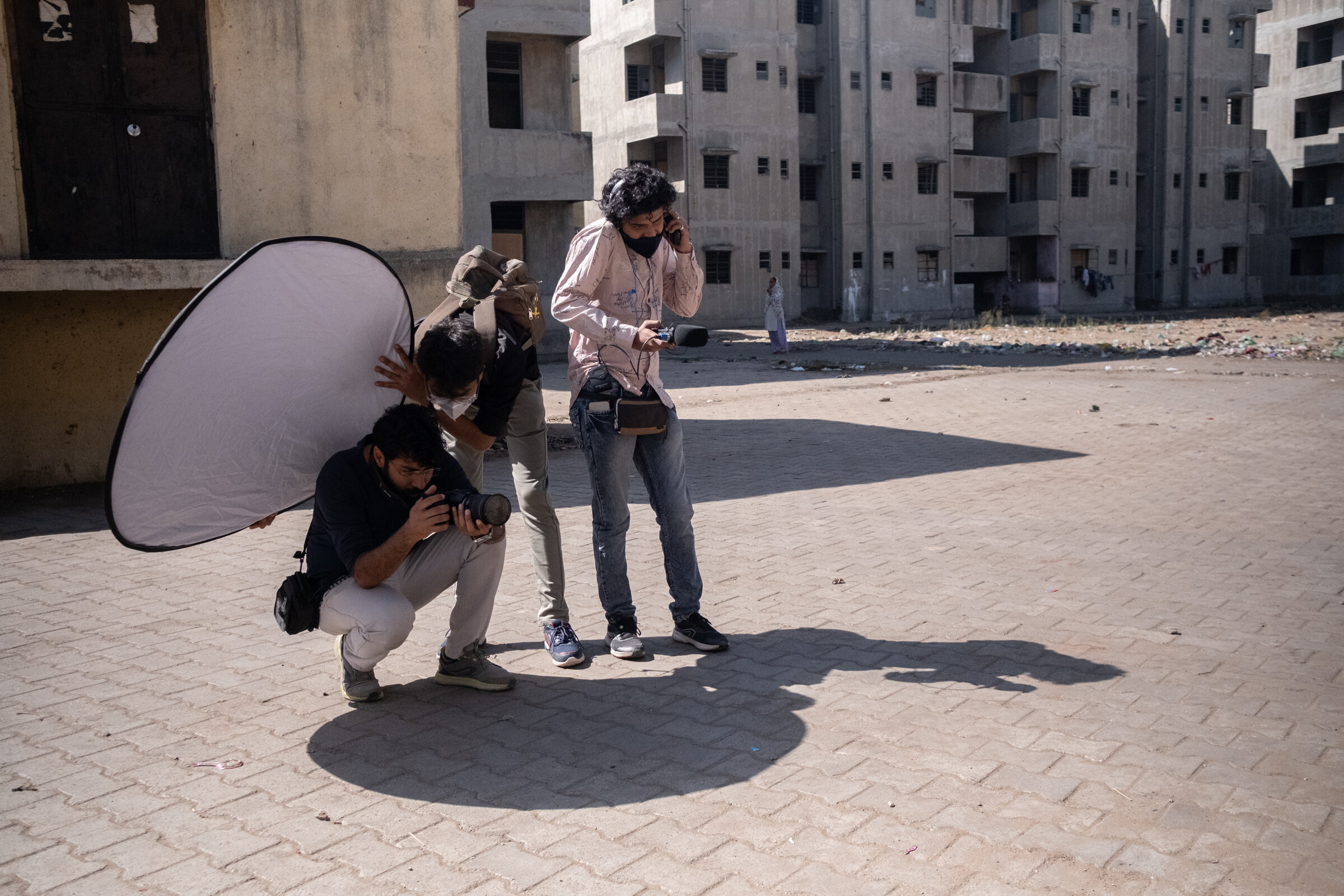
During the COVID-19 lockdowns, when live performance paused and communities turned to film as a new language of expression, members of Budhan Theatre participated in the first workshops in Chharanagar, home of the Chhara DNT community in Ahmedabad.
This led to a first series of short films on pandemic life, blending theatre, poetry, and documentary. As participants learned every aspect of production - from story development to editing - they became filmmakers and mentors themselves, creating a second series that captured stories from De-Notified Tribes across western and central India.
The School has since expanded its training to include Adivasi communities through the Adivasi Academy of Voice in Chhota Udepur, and to regions such as Himachal Pradesh, Rajasthan, and the Andaman Islands. These evolving film ecologies continue to document local realities while building community-led skills in storytelling and media production.


Way forward
The Nomad School of Film and Performing Arts continues to grow as a space for learning, collaboration, and creative resistance. By adapting its methods to local contexts, the School supports community-led storytelling and arts education across India’s marginalised communities. Its long-term aim is to build a sustainable network of storytellers, performers, and researchers who can represent their own worlds, challenge misrepresentation, and reclaim voice and visibility through film and performance.
To sustain and expand this work, the School invites collaborations with artists, educators, researchers, institutions, and supporters who share its belief in art as a means of social transformation. Realising this vision requires continued investment in training infrastructure, equipment, scholarships, travel, and mentorship, ensuring that communities long excluded from cultural production can access the tools and platforms to tell their own stories.


